


AIS Professor Brings His Love of Land to Classroom
By Brian Hiro
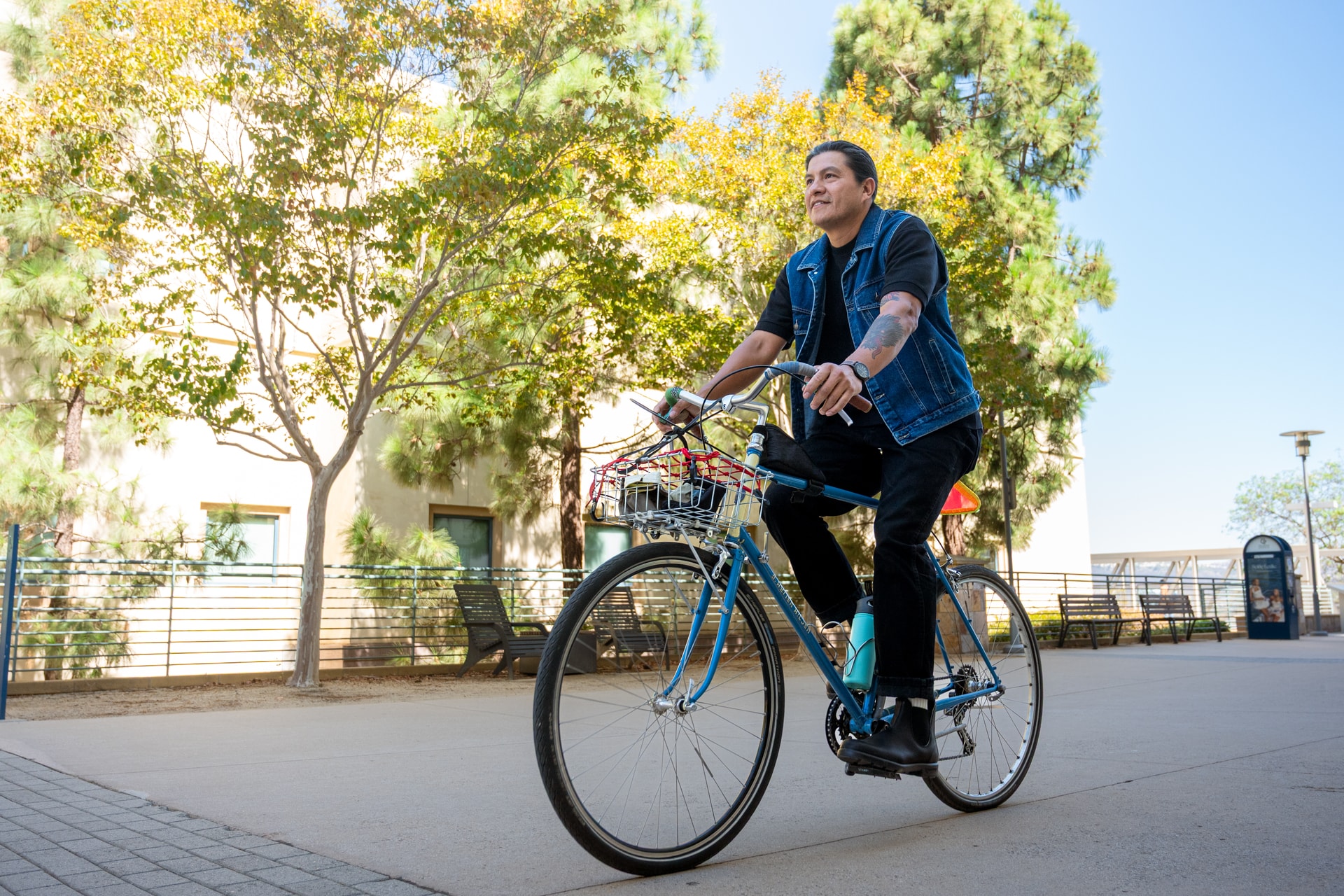
For the last several years, one of the classes that Kenneth Dyer-Redner has taught at Cal State San Marcos is American Indian Studies 225: American Indians and Sports.
The course focuses on sports in American Indian societies from both historical and contemporary perspectives, with attention to the roles of spirituality, culture, identity and sovereignty. It’s a popular class in the department, and perhaps the students’ favorite session is when Dyer-Redner tells the story of his bike trip.
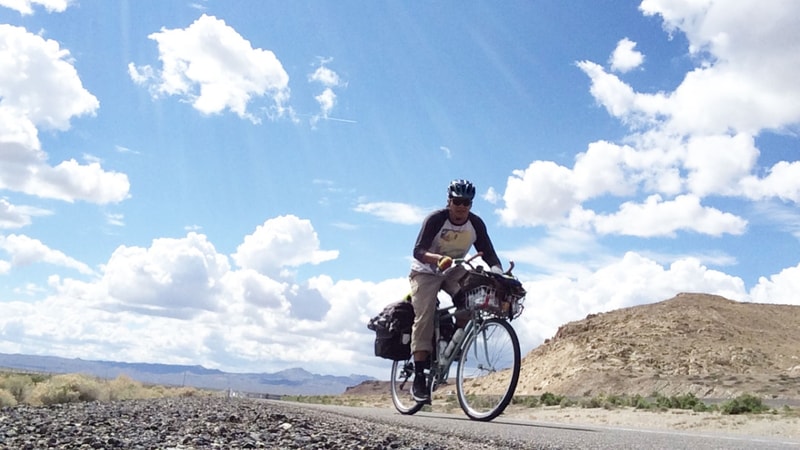
In April 2016, Dyer-Redner – then a master’s student at Arizona State – embarked on a 28-day, nearly 1,000-mile tour of northern Nevada that hit almost a dozen Indian reservations, starting and ending in his hometown of Fallon, headquarters of his Paiute-Shoshone Tribe. He turned the material he gathered during the voyage into his master’s thesis, titled “Vehicle of Resistance: A Bicycle Ride for the Land, Culture and Community.”
“My presentation about that trip is one of the highlights of the semester for the class,” Dyer-Redner said. “It’s when the students are the most engaged. They like hearing stories, and I try to tell them everything that I experienced.”
More than a decade later, Dyer-Redner is wrapping up his first semester as a tenure-track faculty member in American Indian studies after four years as a lecturer splitting his time between CSUSM and San Diego State. He is the third tenure-track faculty in the department, joining chair Joely Proudfit and Kiana Maillet.
Even though he’s married with four children between ages 4 and 13 living in the family home in Chula Vista (a fifth child, 25, resides in Nevada), the open road is calling to him again. Either next summer or in summer 2028, he plans to spend about a month biking from San Diego to the Bay Area, stopping at each of the 21 California missions, which share a complicated and rather dark history with the state’s Native peoples.
“I’d love to see it happen,” Proudfit said of the bike trip. “As Native people, we’re inextricably tied to the land, and his cycling work grows directly out of that relationship. It ties into both his research and his teaching.”
He hasn’t worked out the details, but Dyer-Redner has contemplated the idea of bringing a student or two along with him, paying them with research funds that he has at his disposal.
“They could be research assistants and make a little bit of money doing research about the history of these missions as it relates to Native populations,” he said. “That would be cool.”
Teaching about sports and riding his bike long distances both come naturally to Dyer-Redner, who always has been athletically oriented. He was a standout football and basketball player at his high school in Fallon, and a few years later, when he enrolled at the University of Nevada, Reno, he was introduced to boxing. By the time he graduated with a bachelor’s degree in English in 2009, he was a four-time National Collegiate Boxing Association West Region champion.
“Boxing is one of the most important things for my learning and education,” Dyer-Redner said. “It has helped me a ton. Outside of just being able to throw a punch, the discipline, work ethic, dealing with defeat, all of those things have been valuable.”
After earning his bachelor’s, he moved with his then-girlfriend (now wife, Erica Redner-Vera, an assistant professor of criminal justice at San Diego State) to Phoenix, where she was beginning a master’s program at ASU. It was a somewhat rudderless period for Dyer-Redner career-wise – he worked a “mind-numbing” job packing orders at an Amazon warehouse – but it bore fruit in two important ways.
First, he discovered that Simon Ortiz was a professor at ASU. Ortiz is a Pueblo poet who Dyer-Redner calls a “foundational figure” in American Indian literature, and it felt like serendipity to an English graduate who aspired to become a writer himself. Dyer-Redner emailed Ortiz to request a meeting, and to his great surprise, Ortiz eagerly assented. They developed a friendship that led to Dyer-Redner being invited to read his short stories at campus events, and ultimately inspired him to apply to the master’s program in American Indian studies.
Second, he picked up biking as a hobby, and during his long hours packing boxes for Amazon, he would daydream about all the faraway places he could venture on two wheels. His original idea was to ride across the United States, but that felt too ambitious and expensive. In the end, he decided that the best route would involve returning home to Nevada.
Knowing that it didn’t constitute traditional academic research, Dyer-Redner requested and received permission to turn the bike tour into his master’s thesis project. The chair of his graduate supervisory committee: none other than Ortiz, his new mentor.
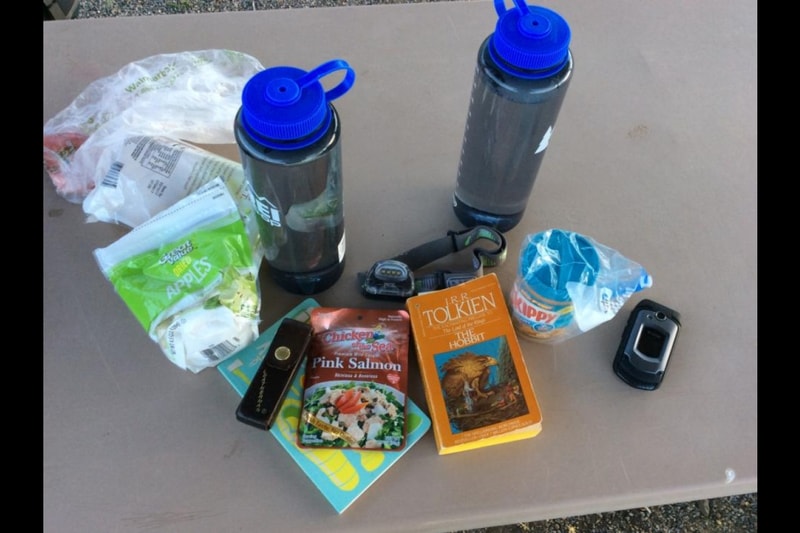
“Once I got approval, then I had to research the route,” Dyer-Redner said. “I researched the pragmatics of bike touring – what kind of bike you should have, the gears you need, how many miles, what’s the average miles you should ride daily. And I bought a bunch of stuff from REI.”
Dyer-Redner, who was 34 at the time, set out in early April of 2016. He averaged 50-70 miles per day and slept in a tent at night. He braved heat, rain, snow, wind and even a sudden hailstorm. Besides the elements, he also battled some loneliness, though he was mostly content to eschew listening to music or podcasts in favor of being at one with his thoughts.
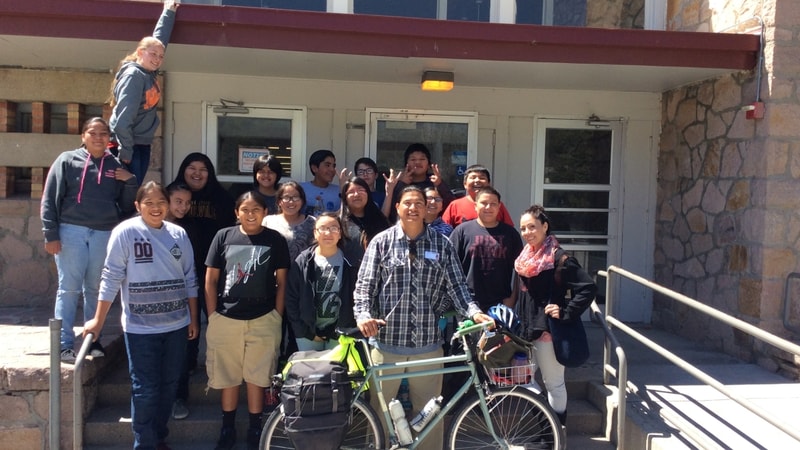
Along the way, Dyer-Redner passed through 16 towns, stopping at 10 reservations and and a few schools (including his college alma mater), where he gave presentations. Teaching, though, wasn’t the main objective. Listening and learning was.
“I wanted to be out in the environment,” he said. “I wanted to establish this communication or familiarity with the land, and I wanted to meet people and hear their stories.
“Being out there alone for a large amount of time reinforced this idea, which is important in traditional American Indian pedagogy, that I can learn things about life and myself without an external source giving me a lesson plan to do so. That was probably one of the biggest lessons.”
Dyer-Redner completed his master’s program in 2017 and taught briefly at the University of Montana before moving to the San Diego area with his family during the pandemic. In 2024, two years after being hired as a lecturer at CSUSM, he started a second master’s program at the Institute of American Indian Arts. He completed his Master of Fine Arts degree last spring and is now working to finish the novel that he began writing while in school.
While continuing to teach American Indians and Sports and other classes, Dyer-Redner will be developing new courses for the department. His varied interests in literature, storytelling and connecting with the land through outdoor adventure make for a unique mix that appeals to CSUSM students.
“Our students love him,” Proudfit said, adding that he attends many events hosted by the department and other American Indian groups. “He’s present, and he shows up for the community. His approach to writing, story, land and community really resonates with students, and that kind of presence outside the classroom matters a great deal to Native students in particular.”
Media Contact
Brian Hiro, communications specialist
bhiro@csusm.edu | Office: 760-750-7306