


Campus Celebrates Life, Legacy of Dolores Huerta
By Brian Hiro
Cal State San Marcos on Wednesday celebrated the life and legacy of Dolores Huerta, the beloved civil rights icon who died earlier in the day at her home in Bakersfield at age 96.
Huerta, best known as the co-founder of the United Farm Workers union in the 1960s, inspired generations of CSUSM students, faculty and staff with her passionate advocacy for the rights and dignity of migrant laborers and all immigrants.
“Dolores Huerta’s contributions remind us that the farmworker movement was built through the courage, sacrifice and collective action of countless individuals and families,” CSUSM President Ellen Neufeldt said. “Farmworkers helped shape California’s economy and our understanding of civil rights, and their legacy remains deeply connected to Cal State San Marcos and the communities we serve.”
It was Huerta who coined the phrase “Si se puede,” which translates to “Yes, we can” and used to occupy a prominent place on the stairs leading to the plaza outside the University Student Union. The saying has become an indelible one for countless CSUSM students, more than half of whom are the first in their families to graduate from college.
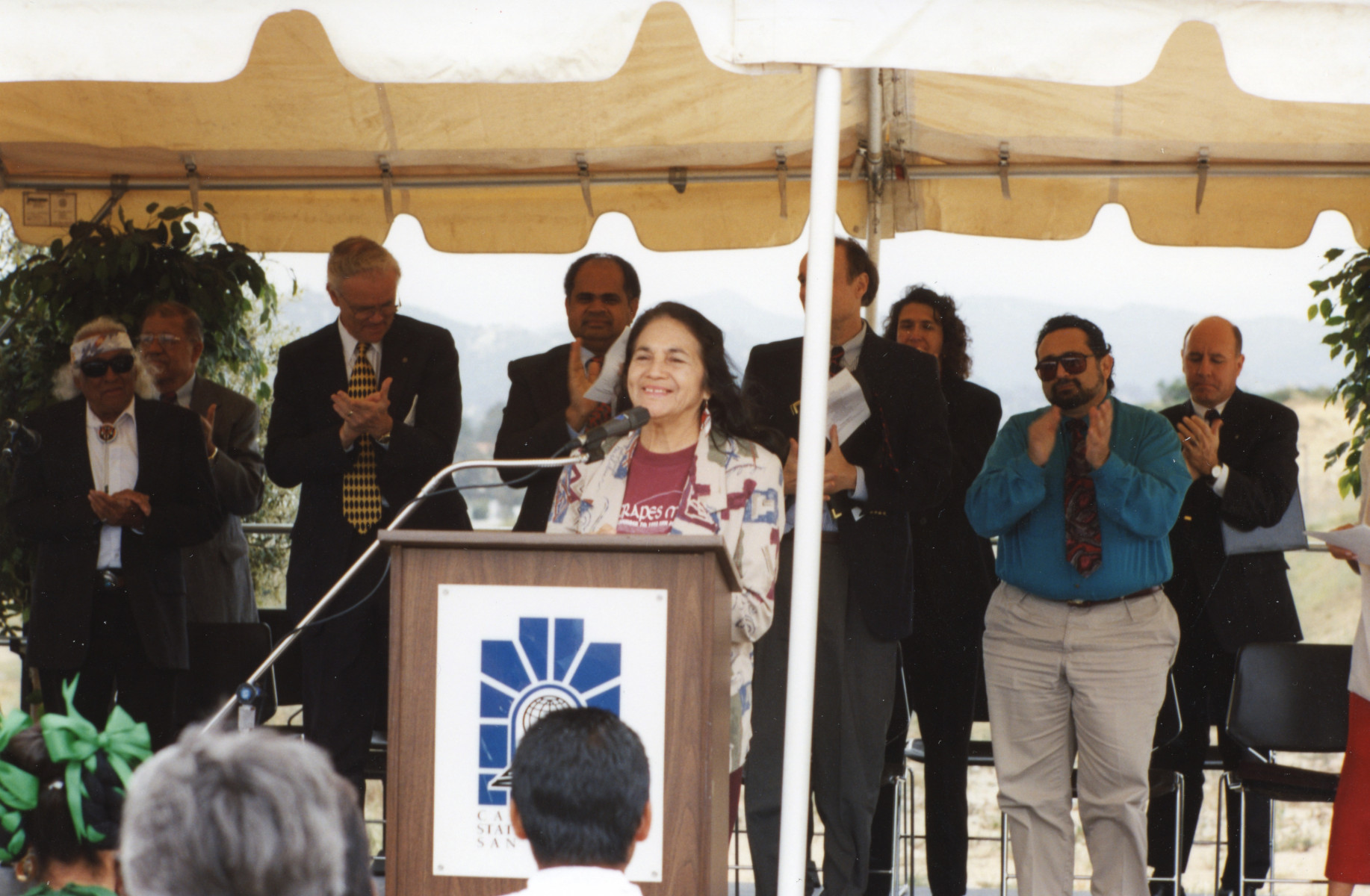
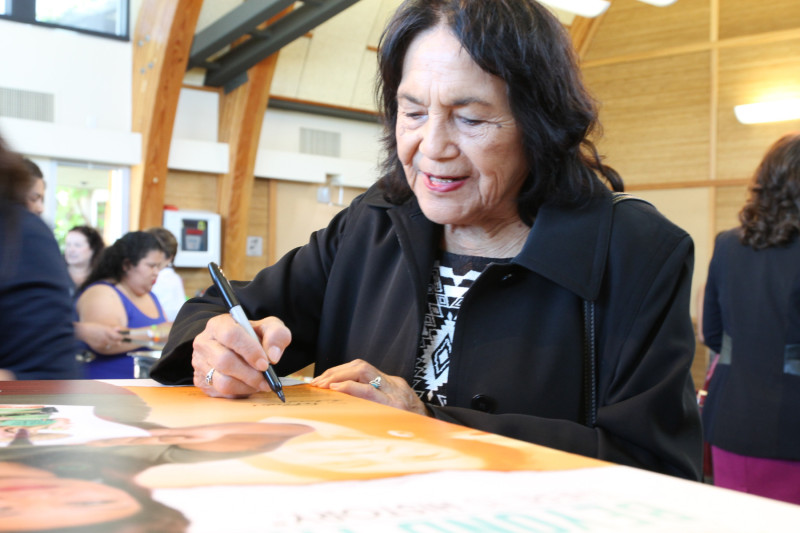
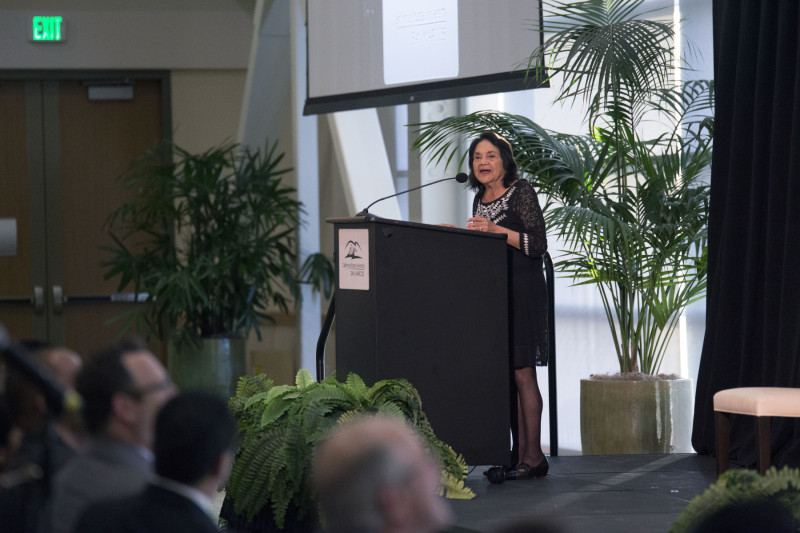
Huerta visited CSUSM at least three times during her life: in 1997 for the dedication of the former Chavez Plaza, in 2006 for a speech to students about civil rights and in 2015 for an Arts and Lectures presentation about fighting for social justice in a global economy. The last of those visits attracted about 1,000 people and was organized by sociology professor Xuan Santos.
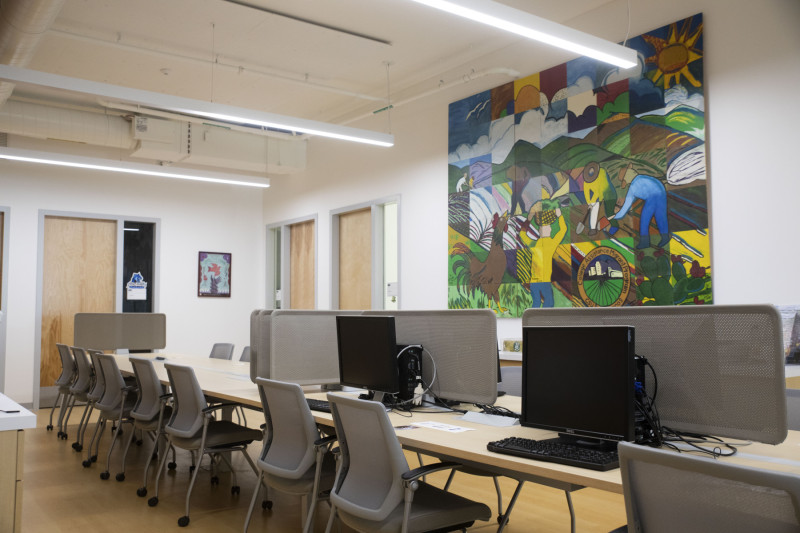
To honor Huerta and her influence on the campus, CSUSM in 2020 named after her the Extended Learning Building office of the College Assistance Migrant Program (CAMP), which helps students from migrant and seasonal farmworker backgrounds succeed in a university setting. The recognition took the physical form of a brushed aluminum plaque calling Huerta a “human rights activist,” featuring a photo of her on one of her campus visits and proclaiming that “because of Ms. Huerta’s advocacy, numerous California laws have aimed to improve the working conditions of farmworkers, affording rights and protections to immigrants.”
CSUSM also contributed to a memory book that the California State University gave to Huerta as part of a larger systemwide tribute.
“As an undergraduate at Cal State Northridge in the 1970s, I was encouraged by Dolores Huerta, who was emblematic of the civil rights struggles of the day,” Minerva Gonzalez, the longtime director of CAMP at CSUSM, said after the dedication in 2020. “She inspired me and countless college students to be involved in the farmworker movement. The historical impact of her efforts helped to create CAMP and is ever present in its programming. CAMP students are taught about their cultural legacy and understand the importance of having a voice and creating a CAMP family to support one another.
“Dolores Huerta will always be front and center of what we do.”
A year after the CAMP dedication, Huerta was further honored when Ann Hunter-Welborn, a staunch supporter of CSUSM since its founding, and her husband, David Welborn, donated $26,000 to the university to establish the Dolores Huerta endowed scholarship. Each year, one CAMP student receives a $1,000 scholarship to assist them in their education.
Huerta led strikes and boycotts in the 1960s and ’70s that unionized many California table-grape growers. In the process, she changed laws and the lives of thousands of migrant laborers while also being arrested 22 times. She was an ally of leaders like former California Gov. Jerry Brown, former New York Sen. Robert F. Kennedy and President Barack Obama, who awarded her the Presidential Medal of Freedom, America’s highest civilian honor, in 2012.
“Dolores Huerta was an inspirational human being and woman,” CSUSM history professor Carmen Nava said. “She loved students; she gave of herself by loving other people, and it came across when you talked with her. She was not about self-aggrandizement, about being famous or wearing fancy clothes – she was about making connections and helping other people.”
Media Contact
Brian Hiro, communications specialist
bhiro@csusm.edu | Office: 760-750-7306