


Double Alumna Finds Calling Helping Others at Yale
By Eric Breier
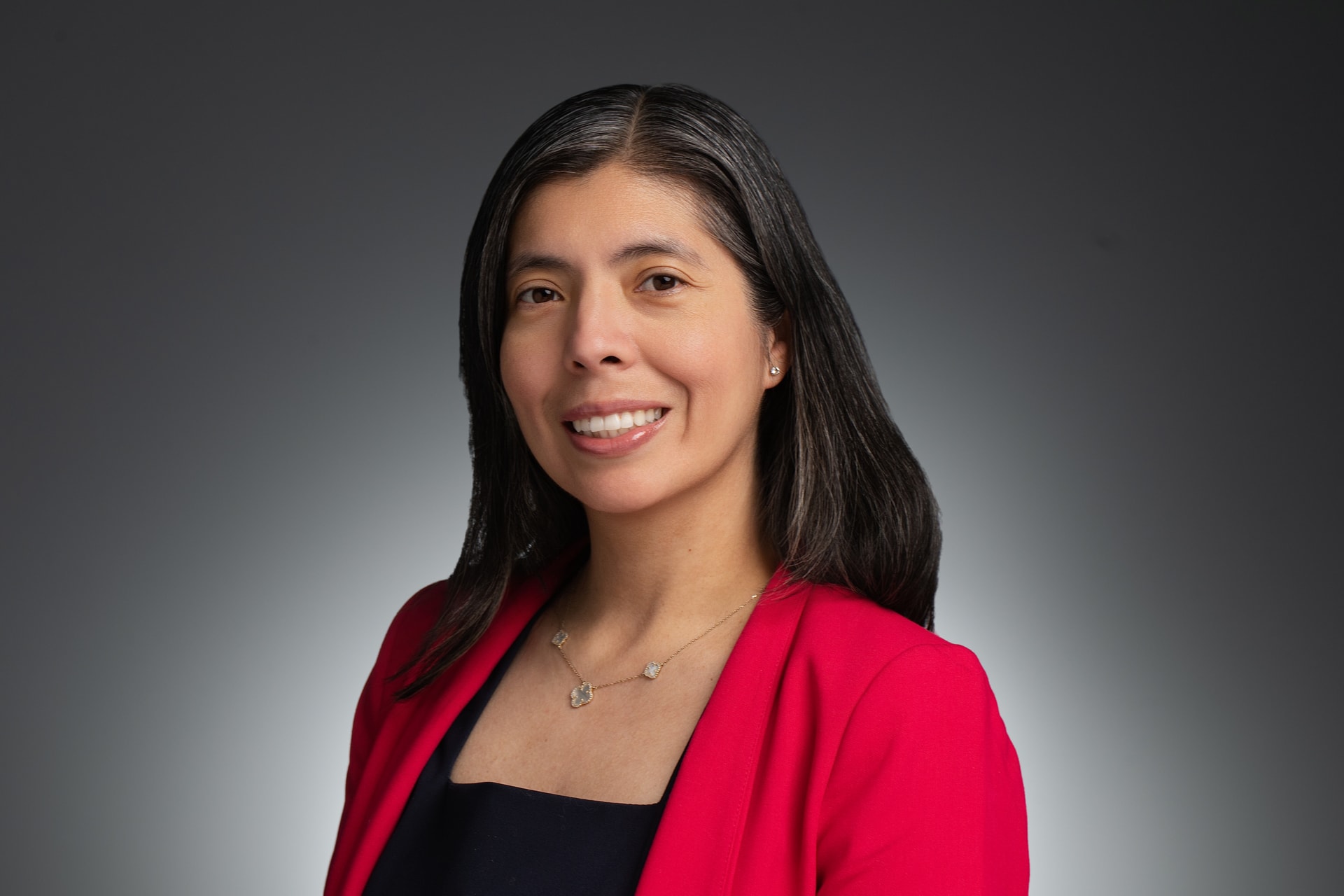
Karina Gonzalez Herrera always intended to pursue a career as a scientist.
It’s certainly the path she was on at Cal State San Marcos, where she earned science bachelor’s (molecular and cell biology and biotechnology) and master’s (biology) degrees. And it was her plan as she worked toward her Ph.D. in biological and biomedical sciences at Harvard.
Then came an opportunity she just couldn’t pass up. It was a chance to help students overcome the types of challenges that she endured in her first year at Harvard.
“I struggled a little bit the first year of grad school,” Gonzalez said. “In general, graduate school can be tough, especially the first year. Because of that experience, I almost dropped out. But I connected with someone who has been an amazing mentor.”
That mentor, Sheila Thomas, asked Gonzalez what issue would be most pressing to address if she were to stay in school. Her answer would eventually put her on a different career trajectory, one centered on helping other students.
That answer? Building community.
“I decided to pursue this career path and do what I have been doing because I wanted to be that kind of person, to support a student should they encounter any challenges when they go on to pursue their Ph.D.,” Gonzalez said.
Gonzalez has been doing just that for the past decade, including six-plus years at Harvard and the past three-plus years at Yale. She joined Yale as the associate dean for the Office of Collaborative Excellence in the Yale School of Medicine in 2023 and was promoted in August to associate dean for Graduate Student Engagement and Development at the Yale Graduate School of Arts and Sciences. In that role, she focuses on supporting Ph.D. students across all disciplines.
Gonzalez’s experience in graduate school is one that resonates with the students she counsels. She knows that hearing how others have struggled can often help students feel more comfortable sharing their own struggles.
“To have somebody who's open and comfortable with talking about it and finding solutions and finding support, I think that is reassuring,” she said. “And it helps people perhaps feel more comfortable about being vulnerable.”
Gonzalez came to the United States from Guatemala when she was 11 years old as her family escaped a decades-long civil war. Gonzalez quickly went from speaking no English when she arrived to a pursuit of higher education and an anticipated career as a scientist.
While she remains passionate about science, Gonzalez knew she had to jump at the chance when Harvard was looking for an assistant director for diversity and minority affairs in 2016.
“It felt like it was written for me,” Gonzalez said.
Beyond a job description that was a perfect fit, Gonzalez got to work for Thomas, the person who provided her with much-needed support when she was struggling as a first-year Ph.D. student.
Thomas gave Gonzalez the opportunity to grow in the role. They collaborated on program development, and Thomas gave Gonzalez the space to take charge of programs.
“She trusted me to do all the right things,” Gonzalez said, “and that was a great experience for me.”
Though Gonzalez and Thomas have since moved on to new roles after their time at Harvard, Gonzalez remains in close contact with her mentor in her new position at Yale.
Following Thomas’ example, Gonzalez checks in regularly with students. If they’re facing a challenge, she’ll ask how she can support them and which specific challenges are most important to address so they can have a positive experience and continue to make progress toward their degree.
Gonzalez also works to recruit and attract talented students to Yale, and she encourages any student considering graduate school to gain research experience.
“A Ph.D. is really research, and that's what faculty are looking for when making decisions,” she said.
Gonzalez said research experience for CSUSM students can come at the university or through numerous outside opportunities during the summer.
Gonzalez also cautions students not to be their own worst enemy. She encourages them to be proactive in seeking opportunities. If the answer is no, then it’s on to asking someone else. And if someone continues to hear no, then it might be time for a different approach.
“Sometimes you just need to ask for feedback,” she said. “You can ask, ‘Can you tell me a little more about your decision or why you think this may not be an opportunity for me at this point?' Or, ‘Can you give me some guidance as to what would have made you say yes to me that I can work on?’ Those kinds of things. And sometimes that ‘no’ comes from not having the time or resources, but it is important to ask. Sometimes imposter syndrome, or imposter thoughts, can hinder us from asking for the feedback or from applying or asking for opportunities, so you need to make sure that you don't sell yourself short, that you give yourself a chance and that you ask. The worst you can get is a ‘no.’ You just need to give something a shot.”
Gonzalez said she contended with imposter syndrome during her first year at Harvard, and overcoming it comes back to having a supportive community. She points to having a stellar mentor in Thomas as just one person in a larger network who helped her thrive.
“I put in the work to get to Yale, but I didn’t do it by myself,” she said. “It's been the result of multiple individuals who have supported me along the way. You need to identify mentors to support you in your journey. You can’t do it alone.”
While Gonzalez has built a career centered on helping students succeed, she hasn’t lost her passion for science. She hopes her 12-year-old twins develop a love for science and math, but even if they pursue other interests, Gonzalez has no plans to leave science behind.
“In the back of my mind, I think when my kids get older and they leave the nest and when I get bored, I can do some science on the side,” Gonzalez said. “I love scientific research.”
Media Contact
Eric Breier, Assistant Director of Editorial and External Affairs
ebreier@csusm.edu | Office: 760-750-7314