


Library Exhibit Gives Voice to Women Under Incarceration
By Brian Hiro
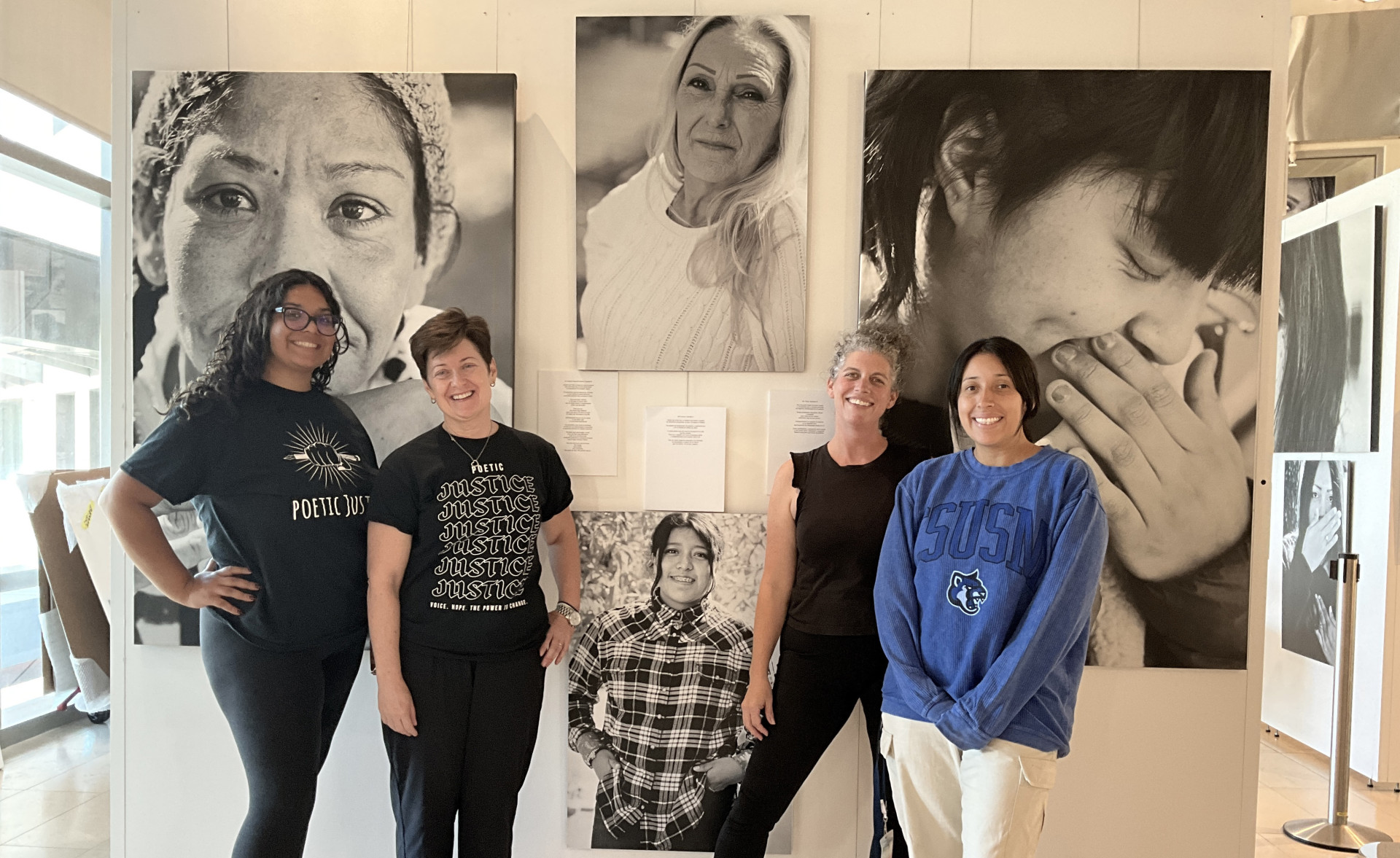
In 2014, two women conducted a writing workshop in the women’s pod of a county jail in Tulsa, Okla.
They used poetry and other types of creative writing as a way to help restore the voices of a couple dozen incarcerated women who had experienced trauma and hopelessness. They called the organization Poetic Justice.
In the dozen years since, Poetic Justice has expanded to several other states – including California, where it has a large presence – as well as Mexico. Last year, it served almost 900 people in women’s prisons, jails and juvenile facilities.
Now, one of Poetic Justice’s signature initiatives has come to Cal State San Marcos.
This semester, the twice-annual Context Exhibit Series on the third floor of Kellogg Library is a display titled “Voices on the Inside.” It’s a series of photographs – many of them outsized – in which women incarcerated in state prisons have been given a chance to direct their own self-portrait in collaboration with Lisa Loftus, a photographer for Poetic Justice. The portraits are inspired by a poem that the women wrote, giving them agency over their narratives.
On Thursday, the library will host two events in conjunction with Voices on the Inside. At noon in the second-floor Makery, there will be a workshop and discussion exploring the use of poetry and photography as a form of rehabilitation and healing. Then, at 5 p.m., a guided gallery walk-through will take place on the third floor, followed by a panel discussion and Q&A on the fifth-floor Kellogg Reading Room.
The panel will feature Poetic Justice leaders and six women (some included in the exhibit) who experienced the carceral system before being paroled.
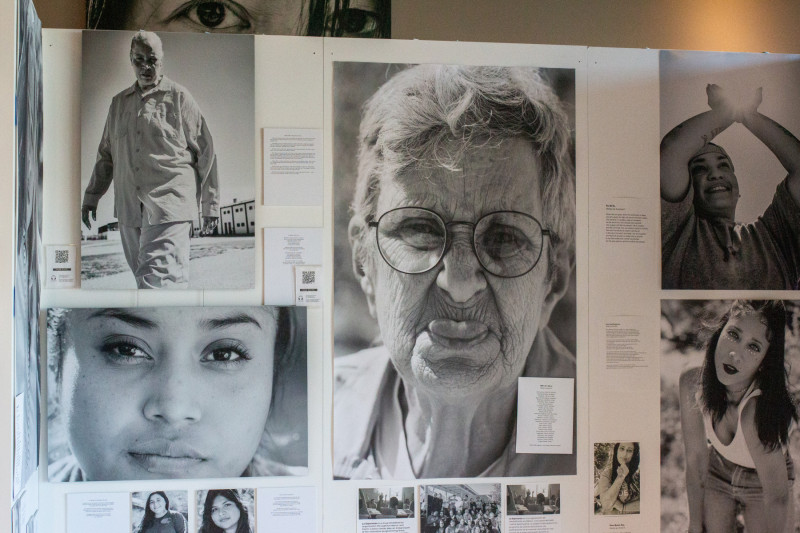
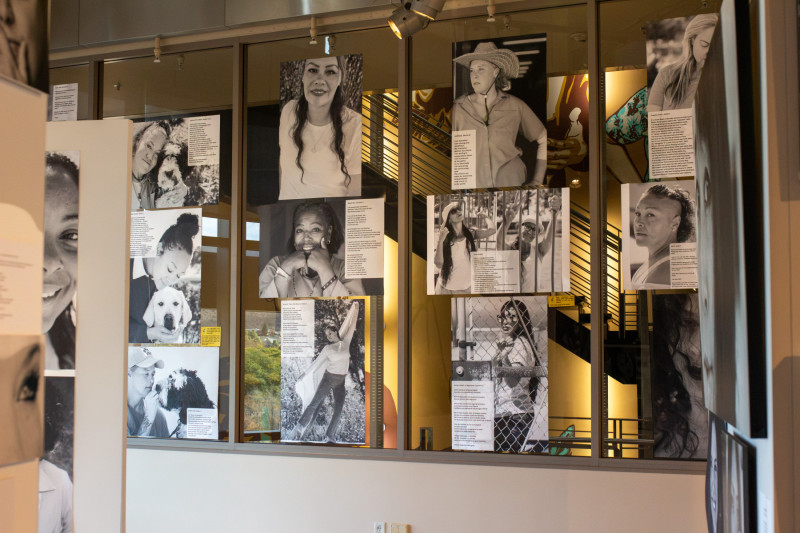
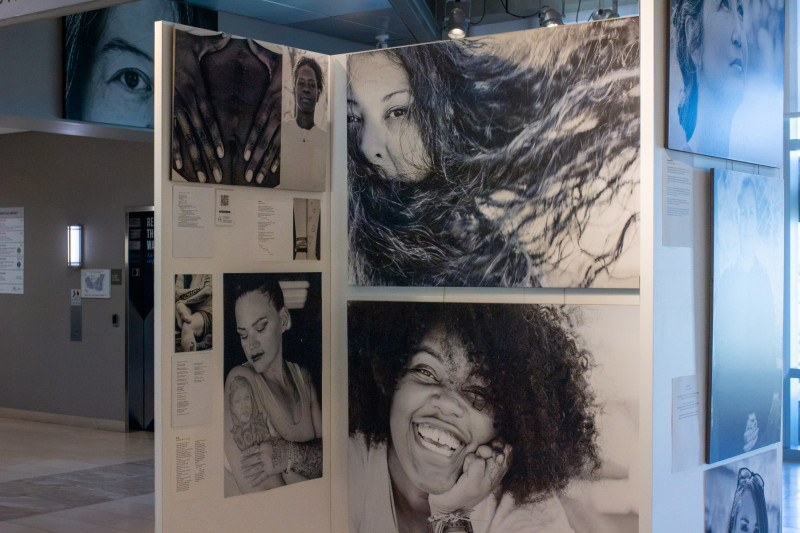
Voices on the Inside is the brainchild of Loftus, a fashion photographer who started with Poetic Justice as a volunteer writing partner, and Katie Turner, the director of the organization’s California program since 2019. During the pandemic, Turner and Loftus would daydream about creating an annual opportunity for people in women’s prisons across the country, and in the Tijuana program, to collaborate with Loftus and the nonprofit’s poetry facilitators to develop self-portrait photos and poems.
“It was important to those first participants that their individual voices be heard through their poetry and that the outsized proportionality of their photographs represent the outsized problem of mass incarceration,” Turner said.
Four years ago, Turner applied for and received a grant from the National Endowment for the Arts to show Voices on the Inside for the first time. It debuted at San Diego’s downtown library before being shown at San Diego State. The exhibit came to CSUSM thanks to a friendship between Loftus and CSUSM sociology lecturer Mary Roche, who connected Loftus with Irma Ramos Arreaga, CSUSM’s outreach and inclusion librarian.
Asked what Voices on the Inside means to her, Turner borrowed the words of one of the exhibit’s participants, who was found eligible for parole after 18 years (after being incarcerated since she was 17) due largely to her rehabilitative efforts with organizations like Poetic Justice.
As the woman said: “I believe that the outside community has been allowed to forget the incarcerated population because they are not faced with our faces or our stories. They are able to dehumanize us and look at us as numbers or a bunch of criminals with nothing to offer.
“For me, Voices on the Inside is a way to stand apart from that misconception and to show the world that I have a voice, I have hope and I have the power to change the world. At the exhibit, people who have an open mind or an interest or curiosity will be exposed to these pieces, and I believe that once they see us, they can’t unsee us. That alone will change their perception, and then everyone they talk to about us will create a domino effect that could tumble into Sacramento’s legislative door.”
Media Contact
Brian Hiro, communications specialist
bhiro@csusm.edu | Office: 760-750-7306