


Alumna Thriving After Big Move to Pursue Ph.D.
By Eric Breier
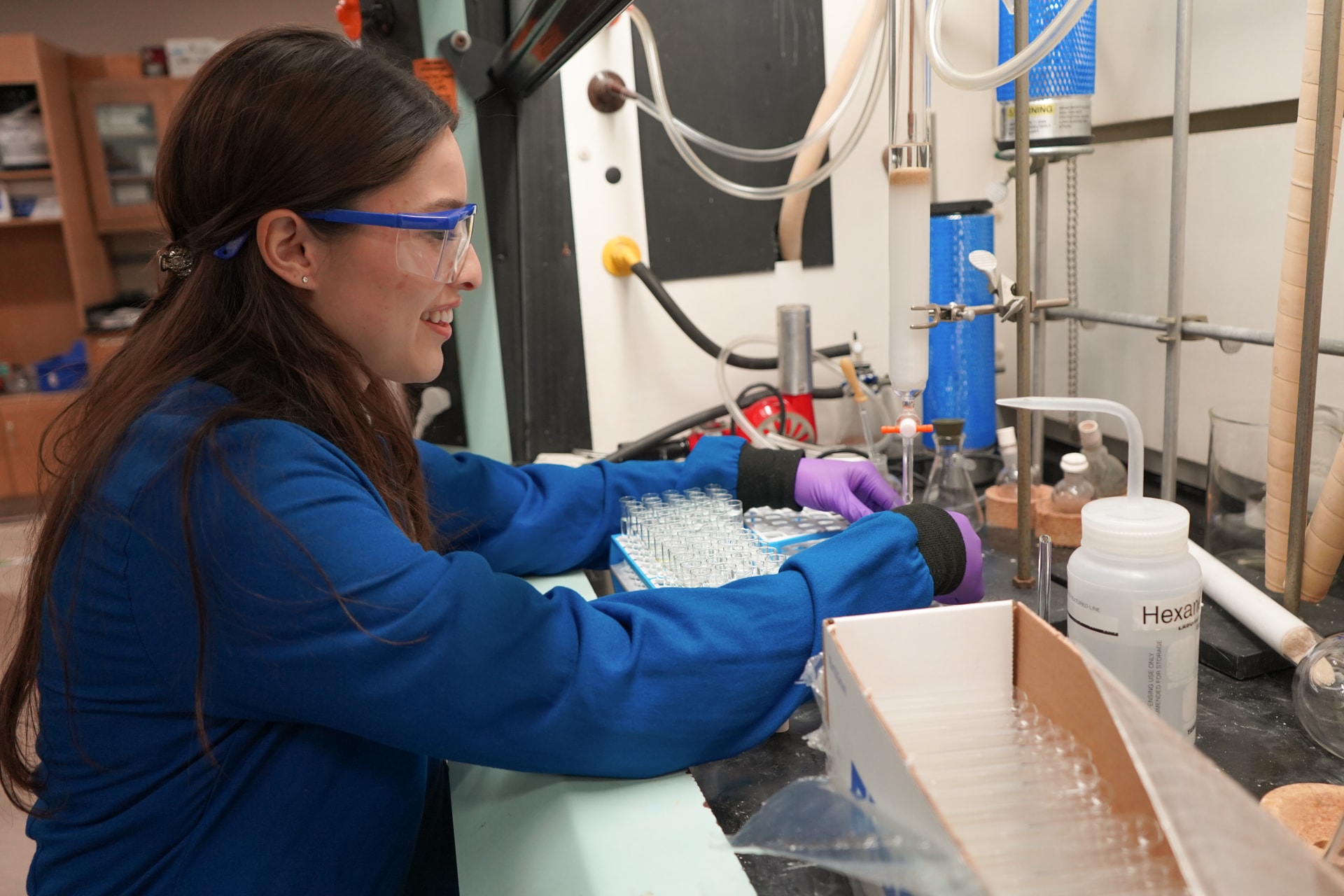
Diana Llamas knew the transition from undergraduate student to a Ph.D. program would come with its share of challenges.
But the biggest adjustments Llamas had during her first year of graduate school at Texas A&M came outside the classroom and lab.
Llamas grew up in Murrieta and lived at home with her parents and three siblings throughout her time at Cal State San Marcos. When she graduated with her bachelor’s in biochemistry in 2025, it also meant leaving home and being away from family for the first time.
“As an undergrad, I saw them every single day,” Llamas said. “I come from a pretty big family, so growing up with that, there was always some kind of noise in the house. It's never quiet there. Here, it's a lot quieter. But over time, you kind of learn how to work around that feeling of family not being there.”
Now in her second year at Texas A&M, Llamas still misses her family. But she keeps up with them on FaceTime and the occasional trip home, and she is thriving as she pursues her Ph.D. in chemistry. She knew Texas A&M was the right place for her the moment she visited while exploring graduate programs.
“Even before I committed, meeting all of the other students in the program, they were very welcoming,” Llamas said. “You could just tell how connected they were in the chemistry program itself, and I think that's one of the main things that really made me want to come here. Of course, the research part is a very big factor, but I also felt so welcomed by the students in the chemistry department. The students here are really amazing.”
Llamas has adeptly managed the responsibilities of being a Ph.D. student. Not only is she taking classes, but she also spends time teaching undergraduate students, grading papers and working in a research lab.
While being away from her close-knit family was an adjustment, it wasn’t the only change that came with living in College Station, Texas, year-round.
Llamas went from CSUSM, which is home to 17,500 students on a 306-acre campus, to the largest public university in the country. Texas A&M has more than 80,000 students, including nearly 73,000 at the main campus in College Station. Oh, and that main campus covers 5,200 acres, about 17 times the size of CSUSM.
As one might imagine, traversing that acreage isn’t easy, though Llamas said the university’s bus system helps.
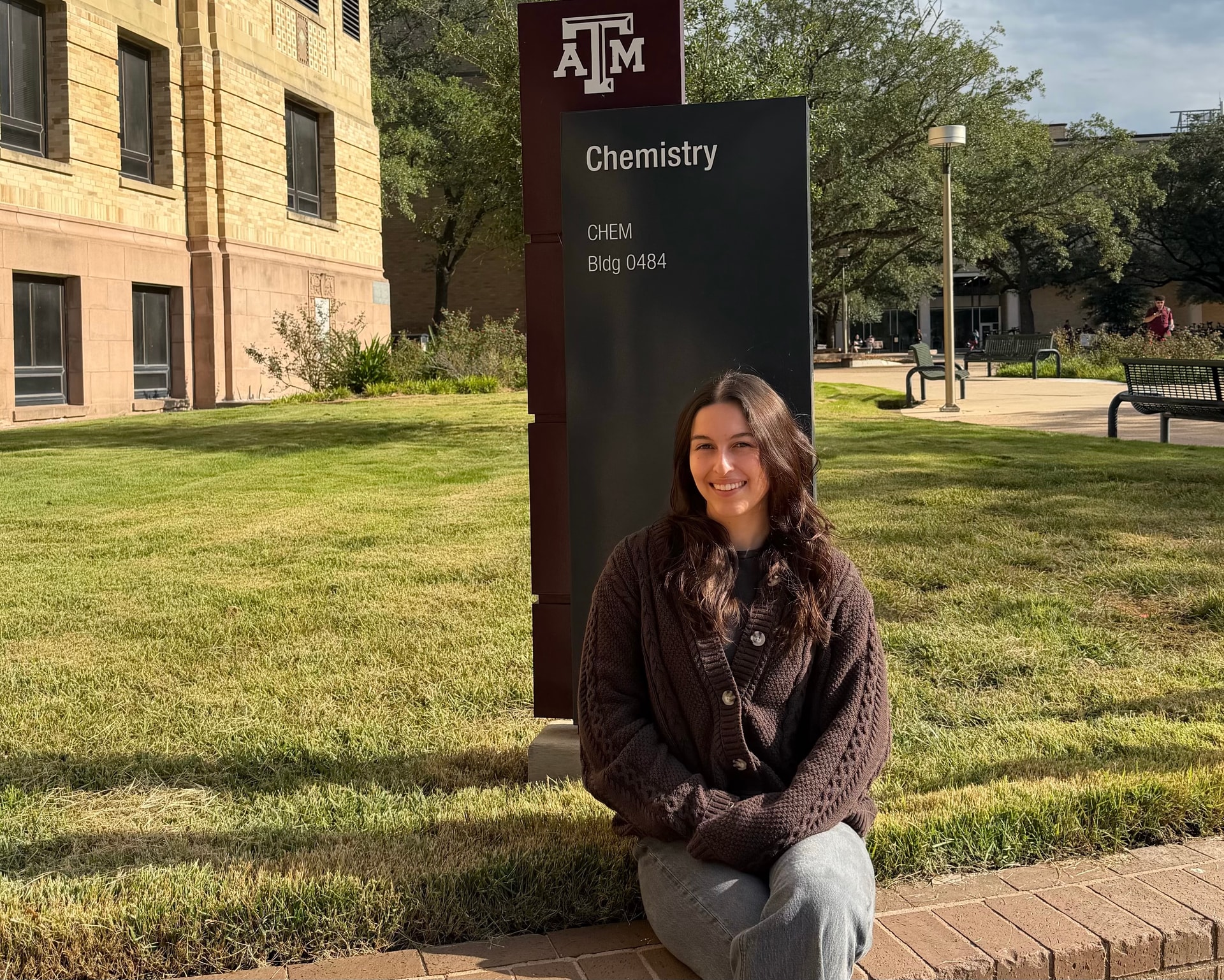
Among the lessons Llamas learned as a first-year graduate student at Texas A&M was the need to register for a parking permit early – as in the beginning of summer, months before the semester starts.
“I think I was No. 1,000 on the waitlist,” she said. “I was not getting anything.”
Llamas managed to secure a permit this year, though it still typically requires a 15-25-minute walk to her lab depending on parking availability.
The Texas lifestyle was also an adjustment. Llamas didn’t grow up a football fan, but she quickly learned that it is ingrained in Texas culture. The university’s on-campus stadium holds more than 102,000 fans (it’s the fourth largest college football stadium in the country) and just about everything comes to a standstill on game days.
“They live and breathe football here,” Llamas said. “But it's nice when it’s football season. You can see the school spirit. During those Saturdays, everybody goes to the games.”
But Llamas’ focus is on her Ph.D. program. She realized about midway through her time at CSUSM that she wanted to pursue her doctorate. She received endless encouragement from her professors, and she remains grateful for the support of chemistry professor Robert Iafe throughout her undergraduate career. She was further inspired to attend grad school during her third year at CSUSM when she earned the prestigious Pfizer La Jolla Academic Industrial Relations Diversity Research Fellowship in Chemistry. She was one of just four people in the western region selected.
Iafe dubbed Llamas “The Trailblazer” when she was a student at CSUSM, and for good reason.
“She is unafraid to take chances and pursue the more difficult path to achieve her goals,” Iafe said. “I was also consistently impressed by her presentations; she carried herself with a level of confidence and professionalism that I had rarely seen in an undergraduate student. At the end of her Pfizer AIR Award research summer, Diana presented her work to senior Pfizer researchers on their campus. As a rising junior, she explained her research and confidently fielded challenging questions from leaders in the field, and she did an outstanding job. That experience perfectly captures who Diana is: courageous, driven and exceptionally poised.”
Llamas said building relationships with professors like Iafe is just one of the vital steps for students interested in pursuing graduate school.
“I really recommend starting research as early as you can,” she said. “The community at Cal State San Marcos was very accepting for me when it came to looking for opportunities. You just have to go and ask your professors, whether that be an email or meeting them in person, letting them know that you're interested early on. It really puts you on the radar.”
Llamas also encourages students to pursue summer research opportunities, which helped on her path to grad school.
While Llamas knew early during her time at CSUSM that she wanted to pursue a career in pharmaceutical research after obtaining her Ph.D., she says there’s no need for young students to worry if they’re not certain exactly what they want to do.
“That's why you’re an undergrad,” she said. “It's for you to kind of learn the specific field that you want to work in.
“If you don't know what the next step is for you, just get some exposure and experience with industry or undergrad research. And that experience will let you know what the next step is for you.”
Media Contact
Eric Breier, Assistant Director of Editorial and External Affairs
ebreier@csusm.edu | Office: 760-750-7314